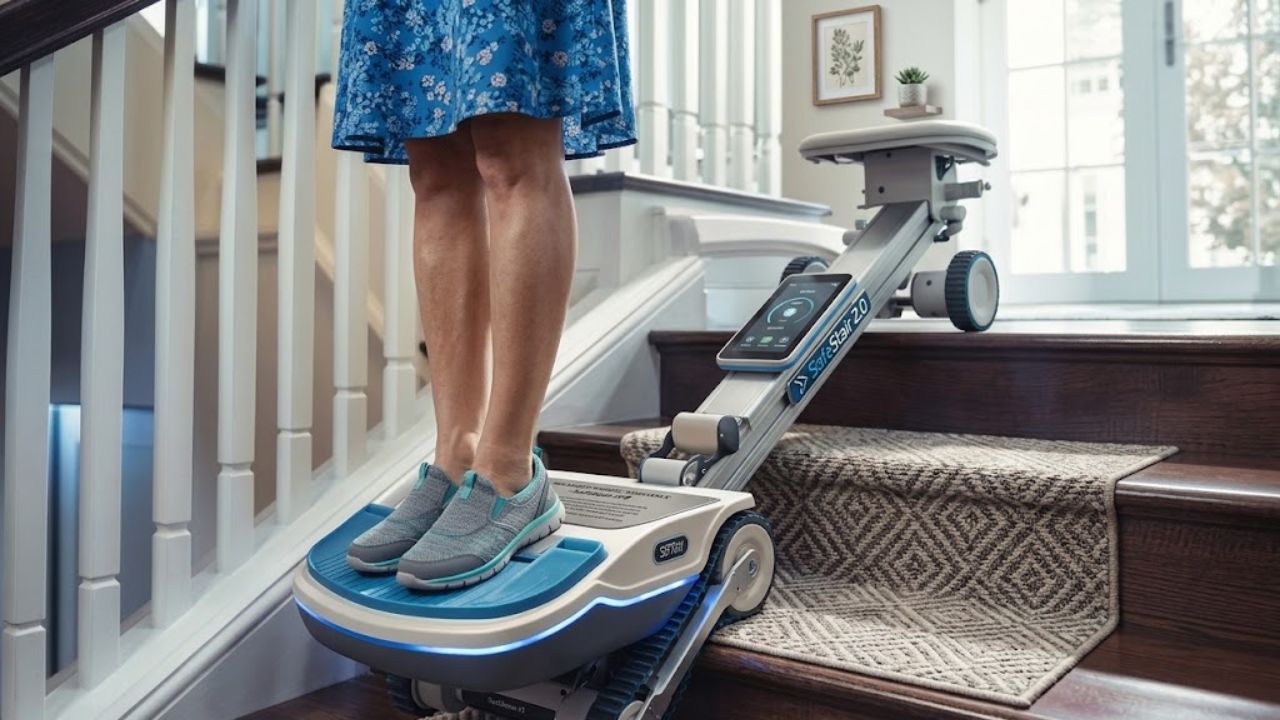
For people with limited mobility, stairs can quickly become one of the biggest challenges inside a home or public building. Mobile stairlifts are helping solve this problem by offering a portable and flexible way to move safely between floors without requiring permanent installation.
Unlike traditional fixed stairlifts, mobile models can often be moved from one location to another. This makes them useful for families, caregivers, rehabilitation centers, and individuals who need temporary or travel-friendly mobility support. As technology continues improving, these devices are becoming lighter, safer, and easier to operate.
How Mobile Stairlifts Work
Mobile stairlifts are designed to transport users up and down stairs using battery-powered systems and advanced climbing mechanisms. Some models are controlled by caregivers, while others are designed for independent use.
These devices can work on different staircase styles, including straight and curved stairs. Many units feature compact frames that allow them to fit into smaller spaces while still providing stability and comfort during use.

Rechargeable batteries power most systems, allowing users to move freely without relying on direct electrical connections during operation.
Important Safety Features to Look For
Safety is one of the most important factors when choosing a mobile stairlift. Modern units are equipped with features designed to protect users during movement on stairs.
Common safety systems include anti-tip technology, secure seat belts, emergency stop buttons, and controlled speed settings. Non-slip surfaces and adjustable armrests also improve comfort and stability.
Reliable braking systems help maintain smooth movement, especially on steeper staircases. Regular maintenance and battery checks are essential to keep the equipment operating safely and efficiently over time.

Different Types of Portable Stairlift Systems
There are several types of mobile stair-climbing devices available depending on the user’s needs. Some models use temporary tracks placed on stairs, while others operate with specialized wheels designed to climb steps independently.
Caregiver-assisted stairlifts are common for individuals who need extra support, while self-operated systems provide greater independence for users with enough upper-body control and mobility.
The right choice depends on factors such as staircase size, user weight, frequency of use, and whether the device will be transported between locations.
Understanding the Costs and Long-Term Value
The price of mobile stairlifts varies based on design, features, and weight capacity. Basic portable units typically cost less, while advanced systems with stronger motors, extended battery life, and enhanced safety technology can be more expensive.
Although the upfront cost may seem high, many families see mobile stairlifts as a worthwhile investment because they improve independence and reduce the need for costly home renovations or assisted living arrangements.
Buyers should also consider warranty coverage, maintenance requirements, and long-term durability before making a purchase.
Final Verdict
Mobile stairlifts provide a practical and flexible mobility solution for people who struggle with stairs. Their portable design, advanced safety features, and growing range of options make them a valuable choice for improving daily independence and comfort. By carefully comparing features, safety systems, and pricing, users can find a stairlift that fits both their mobility needs and budget.
